
How Much Sleep for Recovery? The Real Answer for Lifters
How much sleep for recovery? Most lifters need 7-9 hours. Here’s how to find your ideal range and recover faster.
So, how much sleep for recovery do you actually need? If you train hard, the answer is more than you think. Most lifters need 7-9 hours — and if you’re in a heavy training block, 8-9 is the sweet spot.
Recovery isn’t just rest days. It’s quality sleep.
The Short Answer
- Recreational lifters: 7-8 hours
- Hard training blocks: 8-9 hours
- Cutting calories: closer to 8-9 hours
If You’re Sleeping 6 Hours
Expect slower recovery, lower training quality, and worse body composition. Sleep is a performance tool, not a luxury.
Why Sleep Matters for Recovery
- Muscle repair: tissue recovery is highest during deep sleep
- Hormones: testosterone and growth hormone peak at night
- Performance: sleep loss reduces strength and coordination
- Appetite control: sleep deprivation increases hunger signals
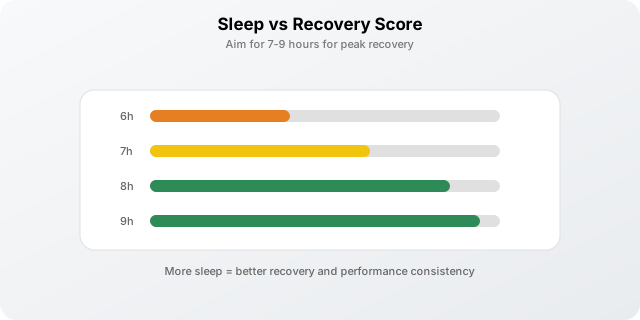
Small improvements in sleep create big recovery gains.
How to Tell You’re Undersleeping
- Waking up sore for multiple days
- Slower progress in the gym
- Higher resting heart rate
- Cravings for sugar and caffeine
Recovery Quality vs Sleep
How sleep duration impacts recovery
3 Simple Ways to Sleep More
- Set a fixed bedtime (start 30 minutes earlier than usual)
- Cut caffeine after 2 PM
- Make your room colder and darker
FAQ
Is 7 hours enough?
For some people, yes — but if you want peak recovery, aim closer to 8.
Do naps help?
Yes. A 20-30 minute nap can help, but it won’t replace full nights.
What if I can’t sleep 8 hours?
Get as close as you can and tighten sleep quality (dark, cold, quiet).
Related Articles
- Sleep and Muscle Growth: Why Recovery Starts in Bed
- 8 Overtraining Symptoms You Should Never Ignore
- Rest Day Workouts: The Best Active Recovery Options
Part of the BodyRecomp Recovery & Performance silo — building your complete fitness knowledge base.
Always consult with a healthcare professional before making significant changes to your sleep routine. This guide is for educational purposes only.
Use calculators that match the research.
Take the ideas in this article and apply them to your own numbers with BodyRecomp calculators built for calories, physique, and planning.